What is GEO, and why is Google ranking no longer enough?
Search has split into two parts. On one side, there’s the familiar Google search results list, and on the other, there are AI answers: Google AI Overviews, ChatGPT, Perplexity, and Gemini. These don’t list links; they tell you the answer and only cite a few sources. If you’re not among the cited sources, you’re practically invisible in the search.
What is GEO?
GEO (Generative Engine Optimization) means you’re not competing for the tenth blue link position, but for the AI to build the answer from your site. Classic SEO is about ranking; GEO is about being cited.
The difference isn’t theoretical: measurements show that the overlap between sources cited in AI answers and Google’s first page has dropped from 70 percent to below 20 percent. This means that even if you rank well on Google, the AI might still recommend something else to your customer.
Why does this affect local businesses too?
For a restaurant, clinic, salon, or car repair shop, the question is no longer “what’s the first result,” but “where should I go tonight in the 13th district?” The AI provides a single short list with three or four names. Those who make it onto that list get bookings; those who don’t remain invisible, even if their website is technically sound.
What makes the AI cite you?
- Clear, factual data. Opening hours, address, services, prices, capacity. AI likes specifics, not marketing jargon.
- Consistent company data everywhere. Google Business Profile, website, Facebook, professional directories: the same name, address, phone number.
- Question-and-answer format content. Write the answer as the customer would ask it: “How much does it cost?”, “Is there parking?”, “Do you accept children?”.
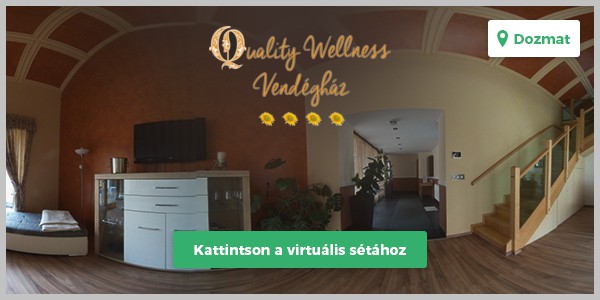
- Real proof. Reviews, photos, virtual tour, case studies with numbers. AI prefers verified, verifiable sources.
- Visual proof. A 360° tour uploaded to Google Maps will be part of your business profile and strengthens local results.
What should you do now if you have a local business?
First, tidy up your business profile: complete data, fresh photos, categories, opening hours. Then, on your website, include a short, question-and-answer structured service description, with specific prices or price ranges. Finally, the visual layer: interior photos and a virtual tour, so that the customer doesn’t just read about you, but also sees the place.
These three steps serve the same goal: for the AI to have something to cite you from, and for the customer not to have to click on your competitor.
Published: